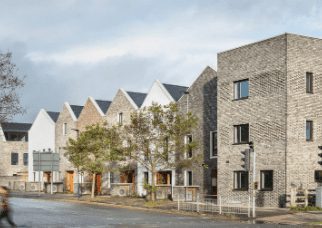
Since 2010, Community Land Trusts have partnered with housing associations and developers to acquire and steward 1,191 community assets – including 1,160 affordable homes, in new developments.
The partnership works best when addressing a shared challenge. Developers need an exit strategy for amenities including green space, community centres and affordable homes, councils often don’t want them, and private management companies are deeply flawed. Many communities want to be able to codesign these amenities, and to ensure they are stewarded for community benefit. Working together, they can create high quality places that are well looked after for generations to come.
In a nutshell
The Community Land Trust can play a variety of roles. In some cases they may initiate a development, acting like a land promoter and inviting a developer to partner on building it out.
In other cases the developer initiates a land-led scheme and the CLT comes in to codesign the place and then acquire assets on practical completion
The Model in Six Possible Steps

1
A local authority might introduce a planning requirement for community assets, and specifically CLTs, across the Local Plan or for a specific site.

2
Either a developer acquires the land/option, or the CLT does, initiating the partnership project.

3
The developer and CLT codesign the scheme to ensure it meets local needs while being commercially viable for the developer, and submit for planning approval.

4
The s106 agreement sets out the assets that will be transferred to the CLT. For a larger development there may also be a stewardship strategy, and a combination of estate/service charges and endowment to support the CLT’s stewardship of the assets.

5
During development the developer and the CLT stay in regular contact, for example through a project board, to discuss changes and assess progress.

6
On practical completion, assets are transferred to the CLT, which raises mortgage finance as necessary. The CLT may also partner with a Registered Provider, acting as the freeholder of affordable homes that are leased to the RP to manage.
Frequently Asked Questions
Does this take longer?
A study by Sheffield Hallam University found that community-led development is not significantly slower than other forms of development, all other things being equal. Up-front investment in the community’s role can speed up progress later.
Is it more expensive?
There can be small additional costs, for example to the RP in the index-linked ground rent paid to the CLT for the land, and to the developer if they are paying a specialist CLT enabler for their role in acting as promoter. But successful partnerships are based on a shared commitment to commercial viability. On difficult sites and in challenging markets, CLTs can also sometimes be effective in attracting additional subsidy e.g. from Homes England, combined authorities or even the local community.
How can this help us?
There is some evidence that CLTs are more likely to obtain land at low values and to secure planning consents, especially when large numbers of local people can persuade committees to overturn officer recommendations of refusal. To date x% of partnership schemes have been approved at planning.
Partnering with the CLTs also puts you in a good light with local authorities and Homes England, both of which tend to be keen to support this model, and you can make a strong ESG impact case to investors and other key stakeholders.
Where do I start?
Most real schemes are a combination, not a single model. A CLT taking on stewardship, a registered provider as landlord for the affordable homes, and often the community itself bringing extra finance and ideas.
We advise the partners bringing these schemes forward: developers and local councils, on how to put the pieces together. Typically that starts with a short, focused piece of work.
And if you are already working with a CLT and want a hand in shaping where this important work goes next, CLTN is recruiting a founding cohort of developers, housing associations and local authorities to co-create a cross-sector network for community-led delivery. Free to take part until April 2027.